

For in-home therapy companies, scheduling is not just a calendar function. It is one of the core systems that determines how smoothly the business runs each day. When visits are spread across homes, territories, therapists, and changing availability, even small scheduling issues can create larger operational strain.
That is why home health scheduling software has become increasingly important for teams managing field-based therapy operations. Manual coordination may work for a while, but growth makes it harder to rely on calls, spreadsheets, text threads, and disconnected updates. Schedulers spend more time reacting. Admin teams lose visibility. Therapists deal with unnecessary confusion. Daily operations become harder to manage than they should be.
For companies delivering PT, OT, speech, and other mobile rehabilitation services, the challenge is not simply scheduling more visits. It is coordinating the right therapist, at the right time, in the right area, while keeping the rest of operations aligned. That is where home health scheduling software becomes valuable. It helps organize the moving parts behind field care so teams can work with more structure and less friction.
Why Scheduling Is So Complex in In-Home Therapy
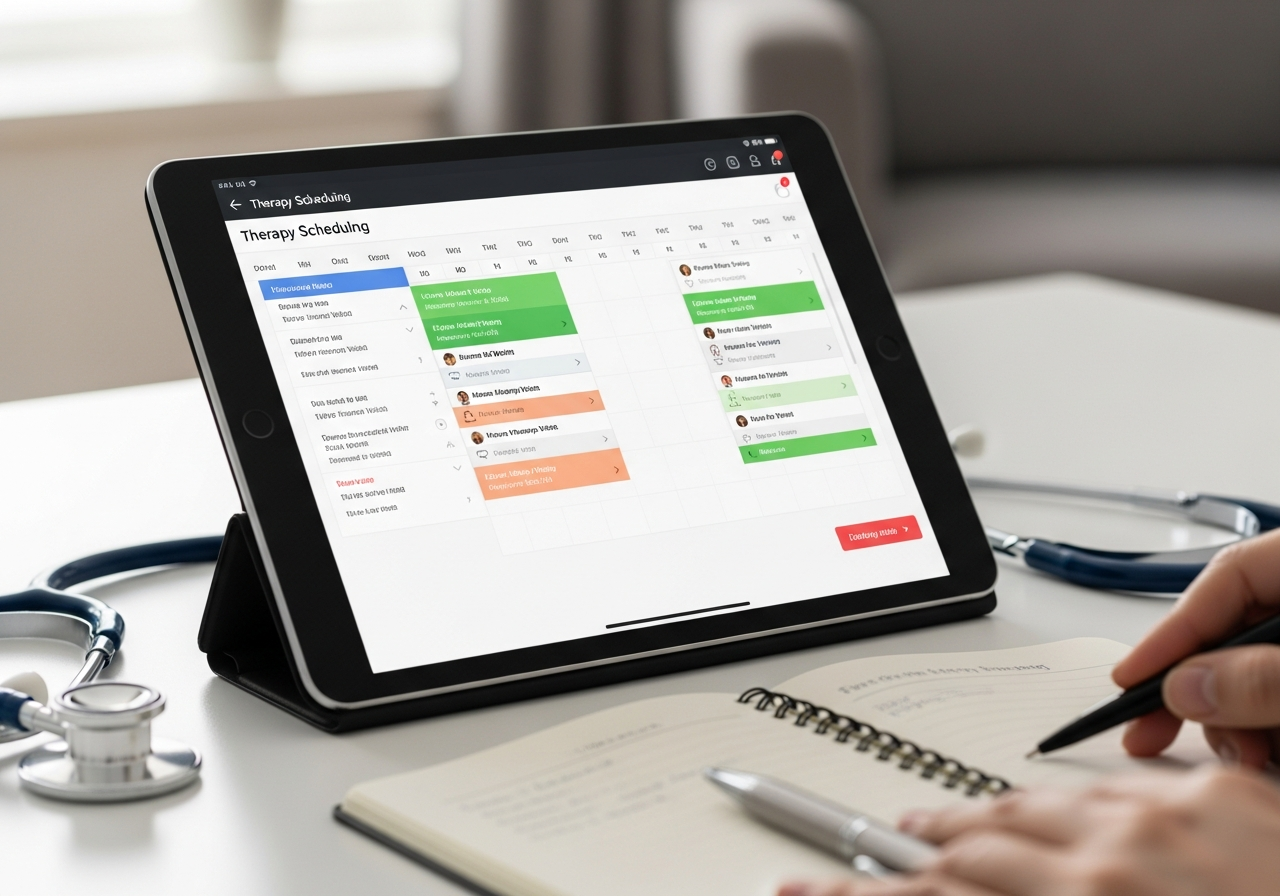
Scheduling in mobile therapy is different from scheduling in a single-location setting. Teams are managing travel, service areas, therapist credentials, availability changes, visit timing, and patient coordination at the same time.
As volume grows, that complexity increases quickly. A single visit change can affect multiple assignments, create route inefficiencies, or force manual follow-up across several people. Without a connected system, teams often lose time trying to fix avoidable problems.
This is why home health scheduling software matters. It gives in-home therapy companies a way to centralize scheduling workflows and reduce the admin burden that comes with distributed care delivery.
What Good Home Health Scheduling Software Should Do
The most useful home health scheduling software does more than display appointments. It should actively support how field operations work in real life.
1. Support Smarter Therapist Matching
Scheduling is closely connected to therapist assignment. Teams need to know not only who is available, but also who is qualified, nearby, and appropriate for the visit. Better scheduling starts with better matching logic.
For in-home therapy companies, this means the software should help account for location, specialty, credentials, and availability. When those decisions are handled more systematically, teams reduce the guesswork and delays that often come with manual coordination.
2. Improve Real-Time Scheduling Visibility
Field schedules change. Visits are confirmed, moved, rescheduled, or updated throughout the day. If those changes are not visible in one place, teams fall behind quickly.
Strong home health scheduling software should support real-time visibility so operations managers, coordinators, and admin teams can understand what is happening without chasing updates across disconnected tools.
3. Reduce Administrative Friction
Manual scheduling usually creates more work than expected. Teams spend time cross-checking schedules, updating spreadsheets, confirming assignments, and fixing preventable errors.
The value of home health scheduling software is that it helps reduce that repetitive effort. With more structured workflows, teams can shift their time away from constant coordination and toward higher-value operational work.
4. Connect Scheduling to Other Operational Workflows
Scheduling does not exist on its own. It affects credential checks, visit completion flow, billing, payroll, and reporting. When those processes are disconnected, operations become harder to manage.
That is why better home health scheduling software should support a broader workflow, not just a calendar interface. It should help connect scheduling to the systems that keep the rest of the business running.
Why In-Home Therapy Companies Need a Specialized Approach
Not every scheduling platform is built for the realities of home-based therapy. Many tools are too generic or too broad to reflect the operational complexity of distributed rehabilitation services.
In-home therapy companies need systems that are built around mobile operations, therapist coordination, and home visit workflows. That includes handling changing availability, coordinating field assignments, and helping teams stay organized as coverage areas and visit volume expand.
This is where home health scheduling software becomes more useful when it is designed specifically for in-home therapy operations rather than generalized business scheduling.
How CliniConnects Fits This Need
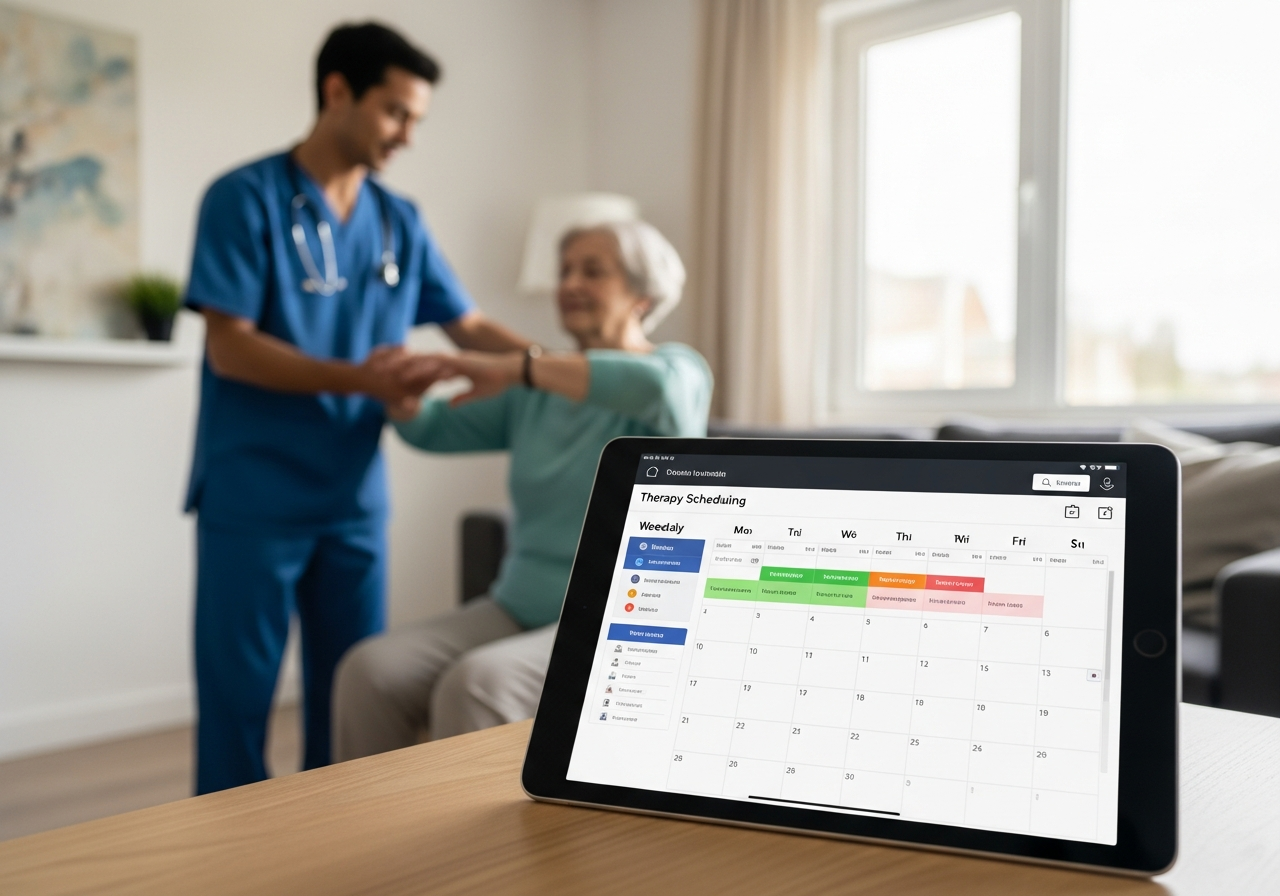
CliniConnects is positioned as an operations platform for in-home therapy companies, with current site messaging emphasizing automated clinician matching, real-time scheduling, credential management, billing, payroll, analytics, and mobile tools.
That matters because scheduling issues rarely stay isolated. When teams are coordinating therapists in the field, scheduling affects assignment quality, compliance safeguards, admin workload, and financial workflows. A platform that centralizes those operational functions can help reduce the friction created by disconnected systems.
CliniConnects is not positioned as a full EMR or clinical system. Its role is operational. It is built to help in-home therapy companies manage scheduling, therapist coordination, credentialing, billing, payroll, and reporting in a more connected way.
Signs Your Team May Need Home Health Scheduling Software
Some teams do not realize how much scheduling is slowing them down until the workload starts stacking up. Common signals include:
● frequent schedule changes creating manual follow-up
● therapists being coordinated across multiple disconnected tools
● heavy reliance on spreadsheets or calls for visit planning
● difficulty matching therapists efficiently across service areas
● limited visibility into daily field operations
● growing admin workload as visit volume increases
When those patterns become normal, the issue is often not effort. It is system design. Better home health scheduling software can help create more control without requiring teams to manually manage every moving part.
What to Look for in a Platform
When evaluating home health scheduling software, in-home therapy companies should look for a platform that reflects field operations directly.
Important capabilities include:
● therapist matching tied to location, specialty, credentials, and availability
● scheduling built for mobile, distributed care delivery
● real-time updates and visit coordination
● credential safeguards that support assignment safety
● connected workflows for billing, payroll, and reporting
● operational visibility for coordinators and leadership
The more a platform is built around the daily realities of in-home therapy, the more value it can provide as the business grows.
Final Takeaway
Scheduling is one of the most important operational functions in any in-home therapy company. When it is handled manually, growth becomes harder to manage, coordination becomes more reactive, and admin workload rises faster than it should.
Home health scheduling software helps solve that by giving teams a more structured way to manage therapist coordination, visit changes, and daily field operations. For companies looking to improve visibility, reduce friction, and support growth without operational chaos, that kind of system can make a measurable difference.
CliniConnects is built around that need, helping in-home therapy companies centralize scheduling and related operational workflows in one platform.
Learn More About CliniConnects
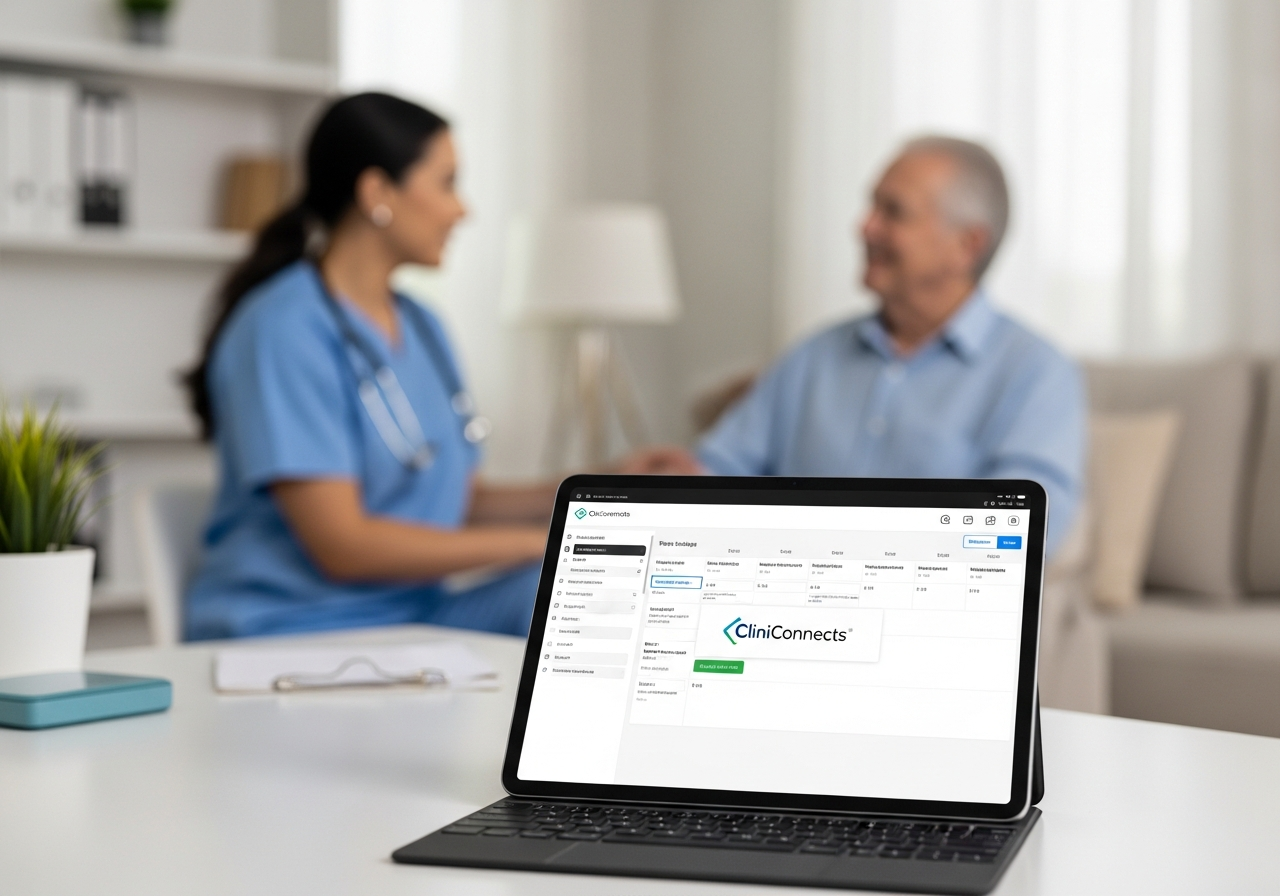
Learn more about how home health scheduling software can help your team improve therapist coordination, reduce manual scheduling work, and create better visibility across field operations. Explore CliniConnects to see how a platform built for in-home therapy companies can support more connected daily workflows.