

How to Automate Clinician Matching for In-Home Therapy

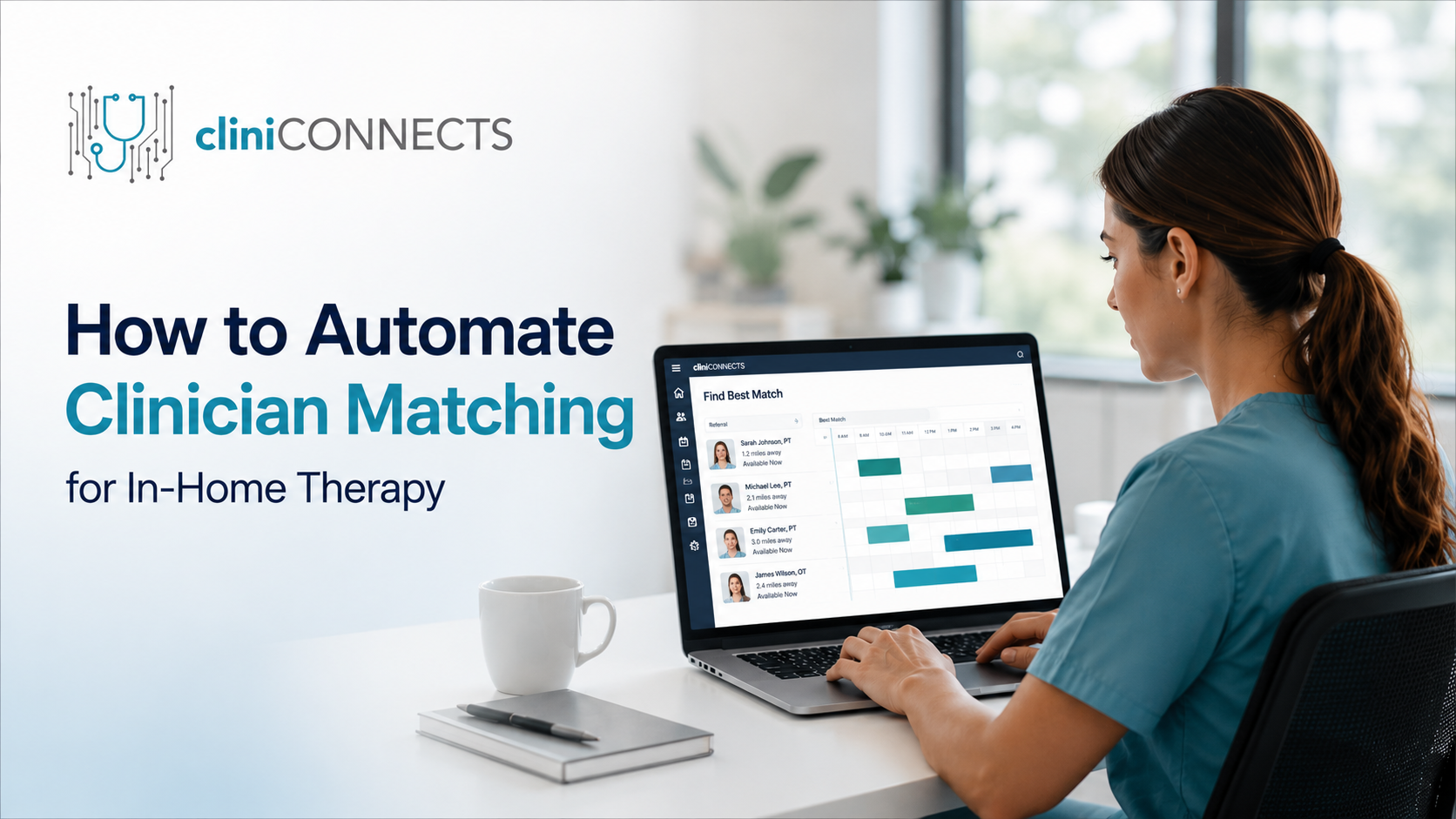
Hero banner showing the cliniCONNECTS logo with a nurse in scrubs using a laptop to illustrate automated clinician matching for in-home therapy.
 
In-home therapy companies lose 1 in 3 referrals before a single visit ever happens.
Not because of poor intake. Not because of limited capacity. The bottleneck is almost always the same: the gap between receiving a referral and confirming the right PT, OT, or SLP to take it.
When you automate clinician matching in-home therapy workflows, that gap can shrink from 45 minutes to under 5 minutes. This guide explains what automated clinician matching is, why manual processes create bottlenecks, and how to implement a system that helps your team assign the right clinician faster.

Why Manual Clinician Matching Is a Structural Problem for PT/OT/SLP Companies

Manual matching wasn’t designed to fail. It evolved over time.
Many agencies rely on a combination of:

     • Spreadsheets
     • Scheduling software
     • Phone calls
     • Group chats
     • Separate credential tracking systems

A typical workflow looks like this:
  1. A referral is received.
  2. The coordinator reviews authorization details.
  3. They verify whether the patient needs PT, OT, or SLP.
  4. They identify the patient’s service location.
  5. They manually search for an available clinician.
  6. They call or message multiple clinicians until someone accepts.
 
By the fourth phone call, 45 minutes may have already passed, increasing the risk of losing the referral.
Industry data suggests referral conversion averages around 64%, meaning more than one-third of referrals never become completed visits. Scheduling also remains one of the most common operational challenges for in-home therapy providers.

What It Actually Means to Automate Clinician Matching

Automating clinician matching does not replace coordinators.
It removes the repetitive work involved in finding the best available clinician while allowing coordinators to make the final decision when necessary.

Instead of manually searching multiple systems, an automated platform instantly evaluates:

     • Required discipline (PT, OT, or SLP)
     • Clinical specialties
     • Geographic service zones
     • Current clinician availability
     • Existing caseload
     • Patient continuity preferences

The result is a ranked list of qualified clinicians within seconds.

Step-by-Step: How to Set Up Automated Clinician Matching


Step 1: Audit Your Current Matching Criteria

Before implementing automation, document the criteria your coordinators currently use, including:

     • Therapy discipline
     • Specialty certifications
     • Patient acuity
     • Geographic territories
     • Caseload limits
     • Preferred clinician continuity

These become the foundation of your matching logic.

Step 2: Centralize Clinician Credentialing Data

Automation only works when clinician data is accurate.

Maintain a centralized database containing:

     • Professional licenses
     • License expiration dates
     • Specialty certifications
     • Geographic assignments
     • Availability schedules
     • Employment status

Keeping this information updated prevents incorrect assignments and compliance issues.

Step 3: Define Your Matching Priority Rules

Not every matching criterion has equal importance.
A typical priority order includes:
  1. Required discipline (mandatory)
  2. Specialty credentials
  3. Geographic proximity
  4. Schedule availability
  5. Current caseload
  6. Patient-clinician continuity
 
Clearly defining these priorities helps the system recommend the most appropriate clinician every time.

Step 4: Run Both Systems Before Going Live

Avoid switching overnight.
Instead, run your manual and automated workflows in parallel for 2–4 weeks.

During this period:

     • Compare recommendations
     • Review mismatches
     • Fine-tune matching rules
     • Validate clinician assignments

This minimizes operational disruption before full deployment.

Step 5: Build an Exception Handling Process

Some referrals require additional review.

Examples include:

     • Bilingual clinician requests
     • High-acuity patients
     • Same-day referrals
     • Mid-assignment authorization changes
     • Complex comorbidities

Automation should flag these cases for coordinator review instead of assigning them automatically.

What to Look for in an In-Home Therapy Platform

Not every scheduling platform is designed specifically for therapy providers.
Look for software that includes:
Feature Why It Matters
Discipline-Specific Clinician Matching Ensures PT, OT, and SLP assignments are accurate.
Credential Tracking Prevents expired licenses from being assigned.
Geographic Territory Management Reduces unnecessary travel time and improves routing efficiency.
Live Availability Prevents double bookings and displays real-time clinician availability.
Configurable Matching Rules Supports your agency’s workflow and assignment priorities.
Native EVV Support Simplifies compliance and visit verification.

 
For a deeper overview of clinician matching software, read here.

What Changes After Automating Clinician Matching?

Agencies that automate clinician matching commonly experience:

     • Faster referral-to-assignment times
     • Higher referral conversion rates
     • Increased coordinator productivity
     • Reduced scheduling workload
     • Improved credential compliance
     • Better patient-clinician matching consistency

Instead of spending time searching for clinicians, coordinators can focus on patient communication and care coordination.
CliniConnects was built specifically to automate clinician matching for in-home therapy providers. Learn more.

Conclusion

Automating clinician matching is about creating a faster, more reliable referral workflow—not replacing human decision-making.
 
Successful implementation starts with:

     • Documenting your matching criteria
     • Centralizing clinician credential data
     • Defining clear priority rules
     • Running parallel testing before launch
     • Choosing software designed specifically for in-home therapy

The result is a more efficient scheduling process, fewer lost referrals, and better support for both clinicians and patients. Schedule a demo